Science & Research

Studies

What training with ICAROS achieves – investigated by universities and clinics.

Studies
4
Participants
75
ICAROS systems
3

Research partners: University of California, Los Angeles · German Sport University Cologne

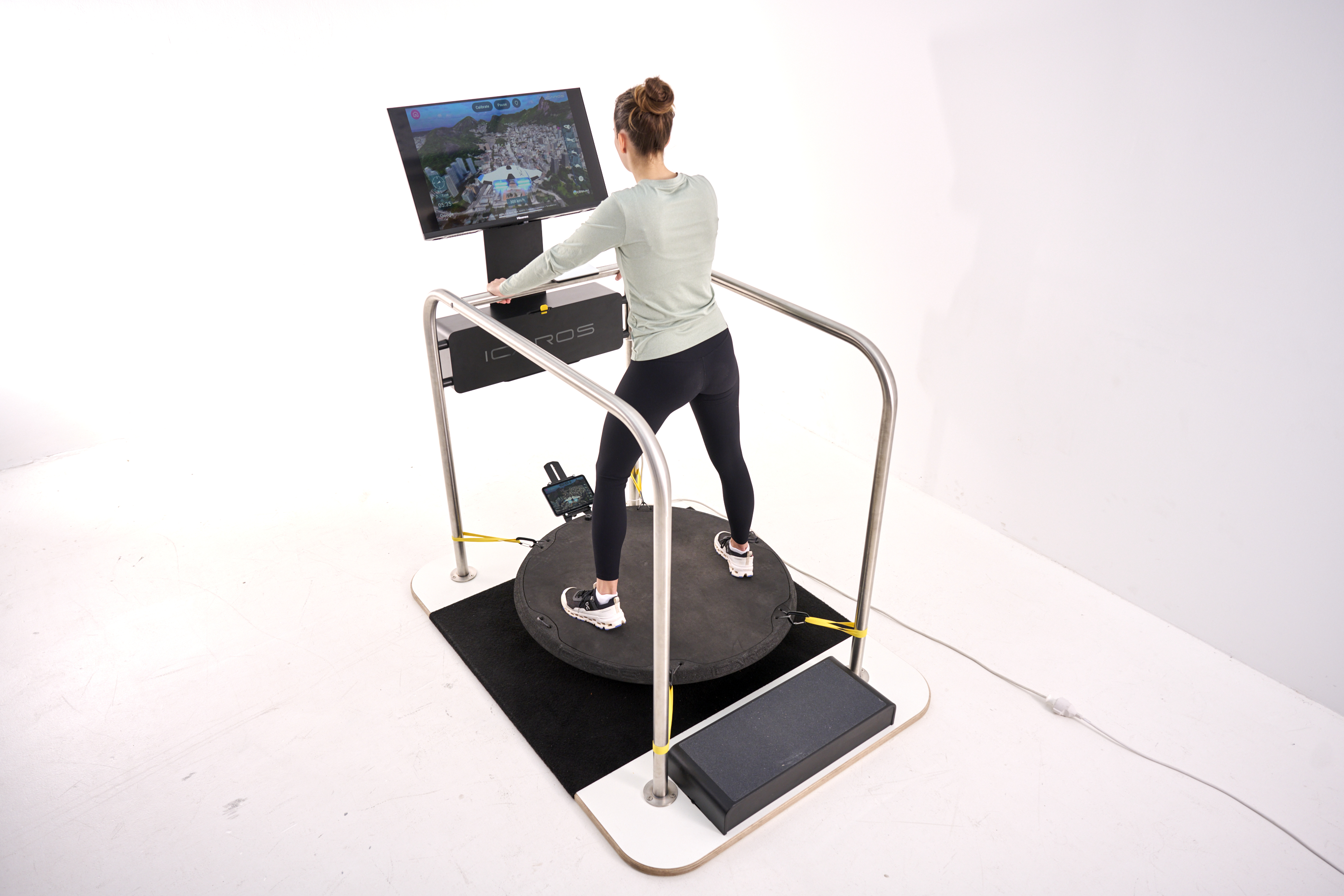
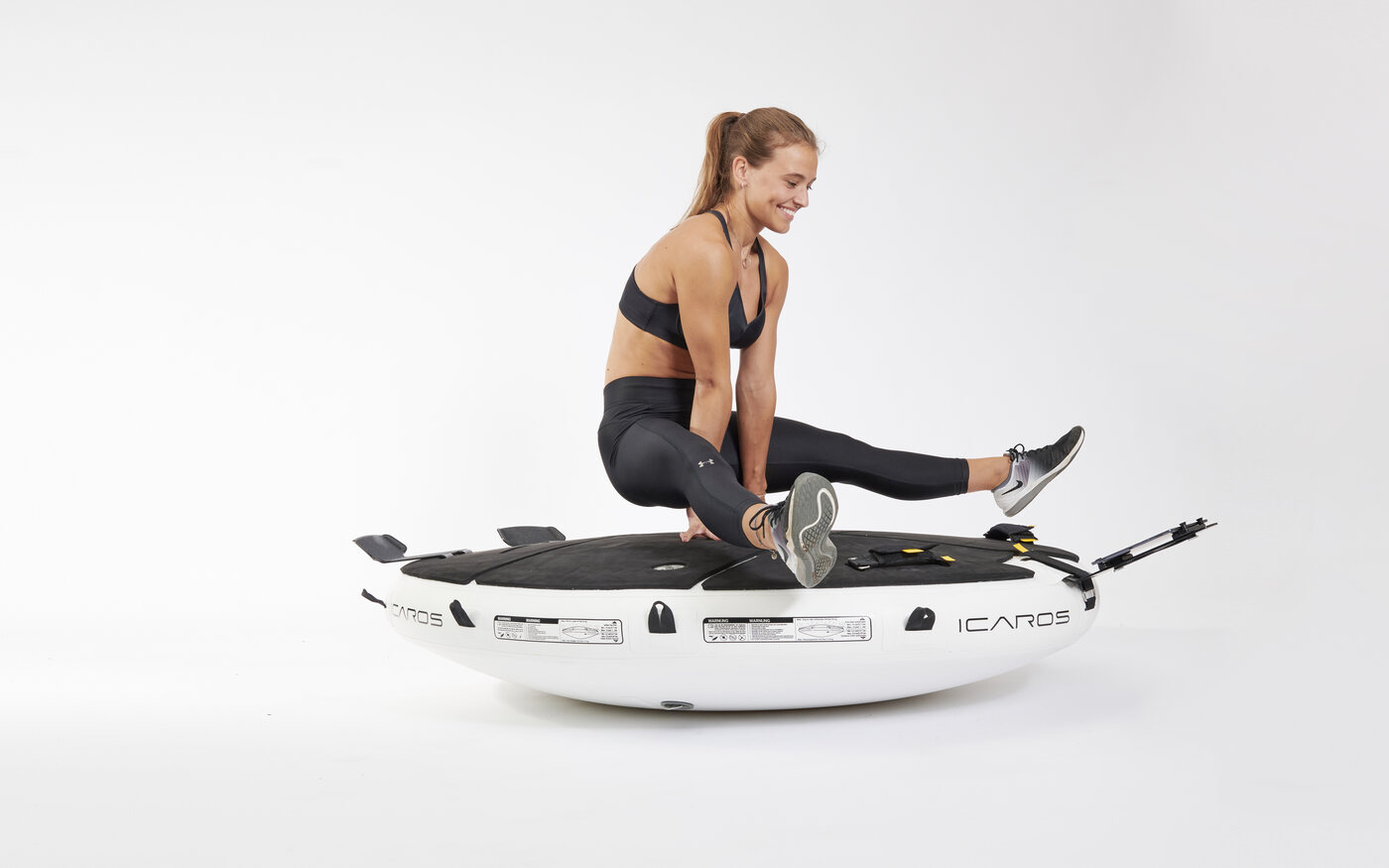
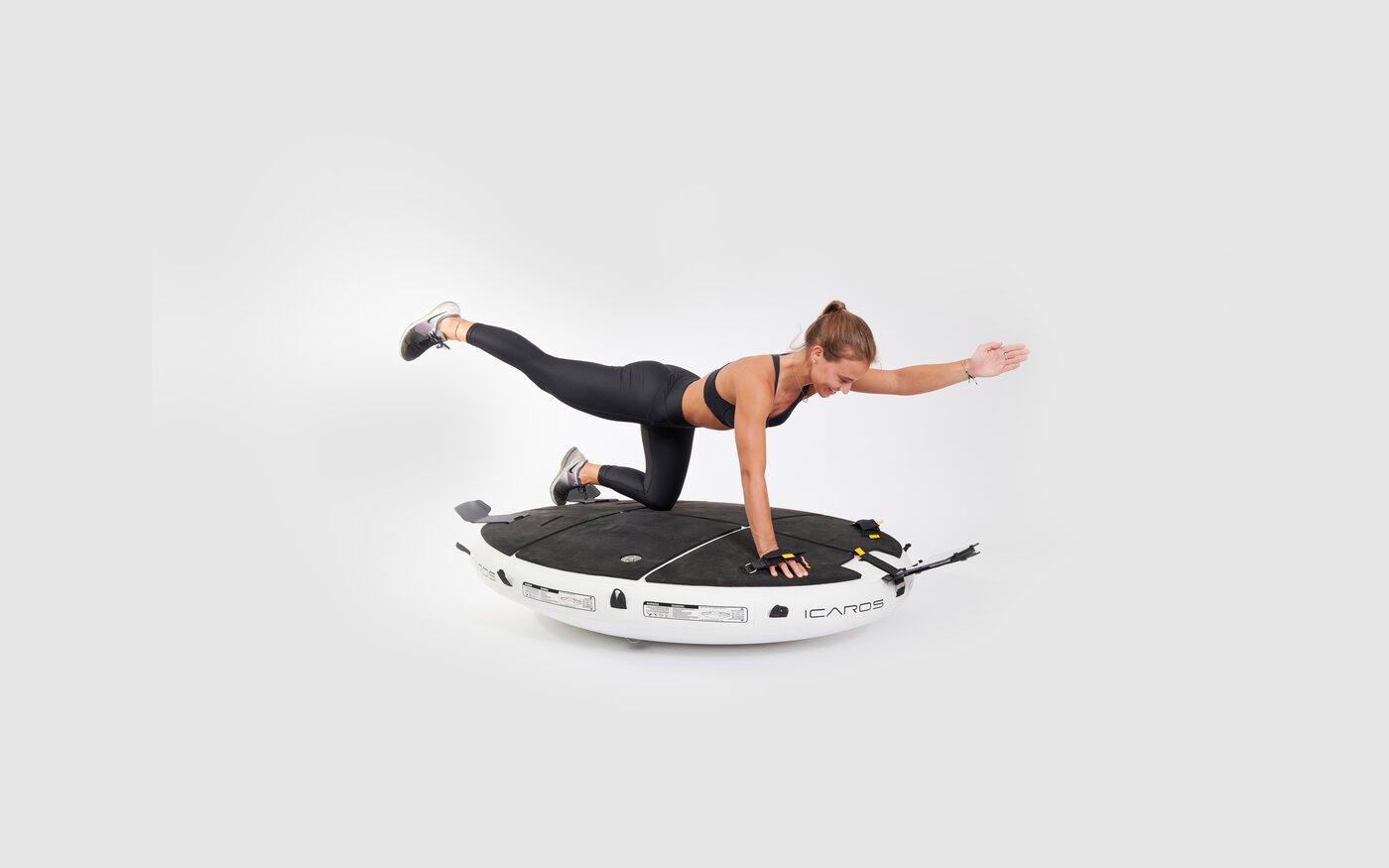
ICAROS Lightning training device
ICAROS Lightning

Peer-reviewed publication · Applied Sciences (MDPI), 2026

Two minutes to a more precise throwing shoulder

After just two minutes on the ICAROS Lightning, baseball pitchers reproduced shoulder angles far more accurately.

  • −75%Position error, external rotation
  • −52%Position error, internal rotation
  • 2 minTraining time

ICAROS Lightning · Applied Sciences (MDPI), 2026

Two minutes to a more precise throwing shoulder

Research question

Can a single, brief VR session on the ICAROS Lightning improve joint position sense in the throwing shoulder of collegiate baseball players?

Study design

Participants
9 collegiate baseball players
Training
2-min VR flight through a ring course
Design
Pre–post pilot study
Measures
Active shoulder joint position sense (internal & external rotation)

Measurements

Position error, external rotation
−75% (6.3° → 1.6°)
Position error, internal rotation
−52% (8.1° → 3.9°)
Training time
2 min (a single session)

Key findings

  • Angular error dropped significantly in both rotation directions (p < 0.001).
  • Very large effect sizes (Cohen’s dz = 2.70 and 2.23).
  • External rotation – the direction most relevant to throwing – improved the most.

Context: Pilot study with a small sample and no control group; it examined the immediate effect of a single session.

Source

Kidwell JA, Hoang J, Greenwood N, Medina Batista D, Bolton M, Mun J, Yamamoto T, Dolezal BA. A Closed Kinetic Chain Task Utilizing an Immersive Virtual Reality-Based Platform Acutely Improves Shoulder Joint Position Sense in Collegiate Baseball Athletes. University of California, Los Angeles (UCLA) & Creighton University. DOI: 10.3390/app16168318

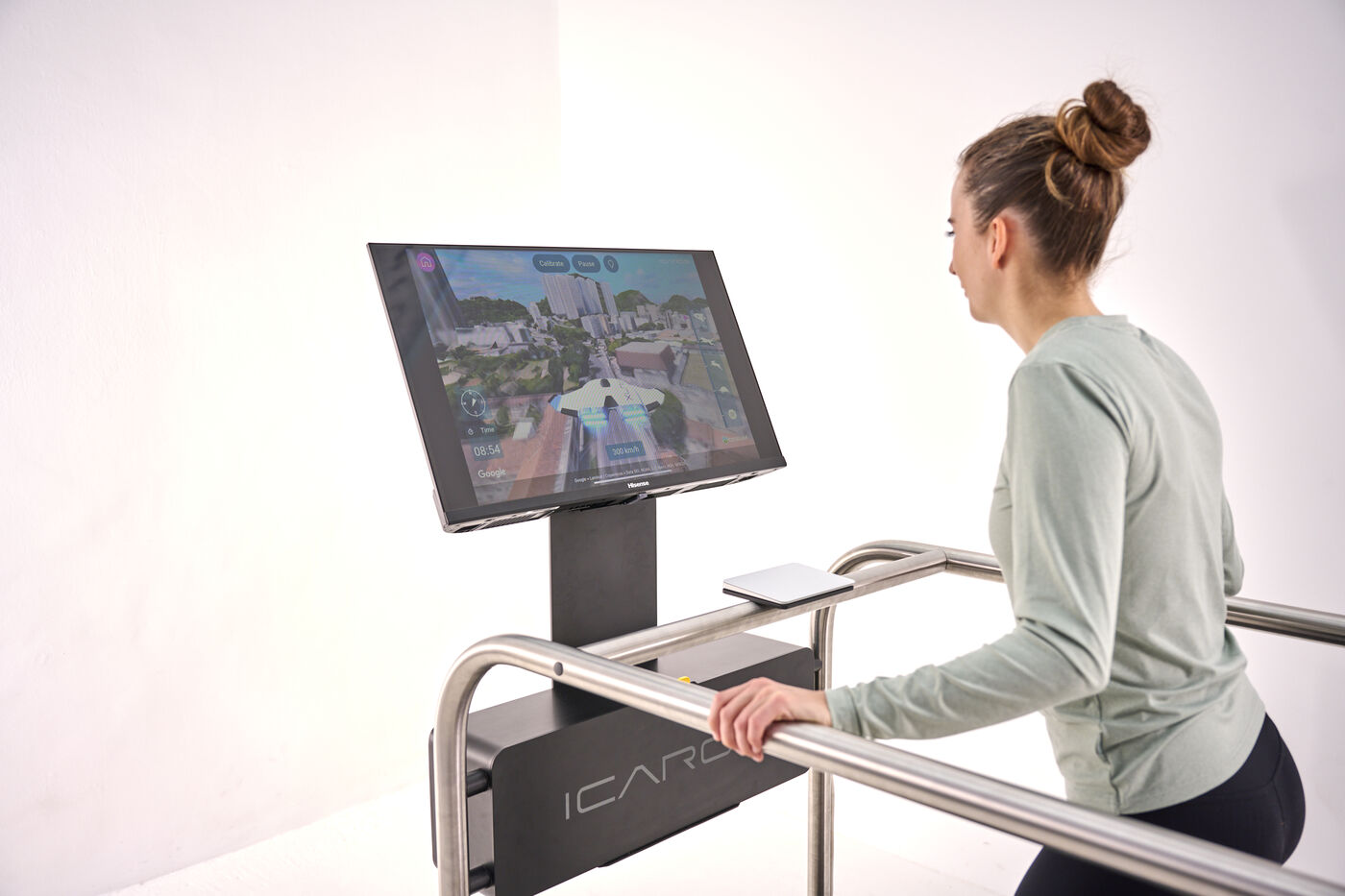
Smiling older woman training on the ICAROS Guardian
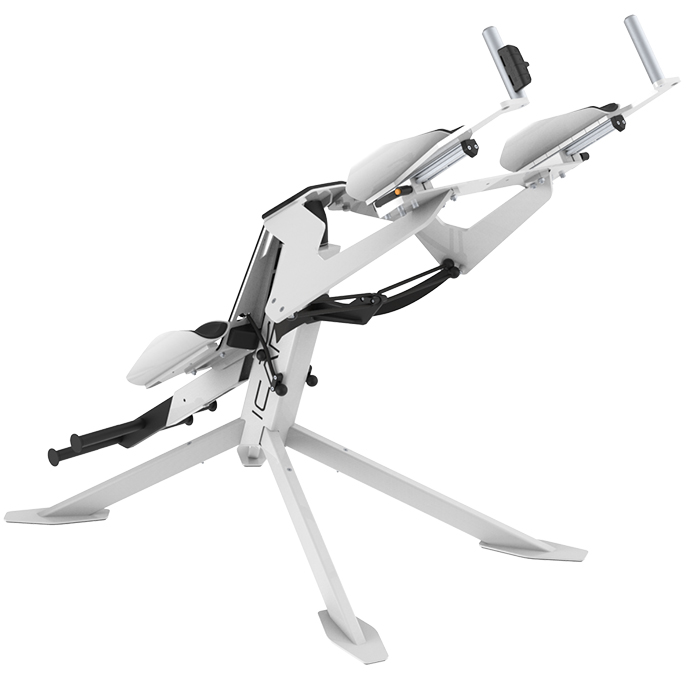
ICAROS Guardian

Peer-reviewed publication · German Journal of Sports Medicine, 2026

More mobile and mentally fit in later life

Older adults and rehab patients improved cognition, mobility, gait speed and leg strength.

  • +41%Leg strength (sit-to-stand)
  • −24%Timed Up and Go time
  • +16%Gait speed

ICAROS Guardian · German Journal of Sports Medicine, 2026

More mobile and mentally fit in later life

Research question

How does exergame training on the ICAROS Guardian affect cognition, mobility and leg strength – in community-dwelling older adults and in geriatric rehabilitation?

Study design

Participants
12 older adults (avg. 71 yrs) and 15 rehab patients (avg. 85 yrs)
Training
6 weeks 2×/week or 3 weeks in rehab, approx. 20–25 min each
Design
Pre–post feasibility study in two settings
Measures
MoCA, Timed Up and Go, gait speed, sit-to-stand

Measurements

Leg strength (sit-to-stand)
+41% (Rehab: 11.5 → 16.2 reps)
Timed Up and Go time
−24% (Rehab: 15.4 → 11.8 s)
Gait speed
+16% (Older adults: 1.74 → 2.01 m/s)
Points in cognitive test (MoCA)
+2 (Older adults: 25.7 → 27.7)

Key findings

  • Both groups improved in every test – cognition, mobility, gait speed and leg strength.
  • All improvements were statistically significant except dual-task costs in the rehab group.
  • The effects appeared despite short sessions of around 20–25 minutes.

Context: Feasibility study without a control group – it lays the groundwork for a randomized follow-up trial.

Source

Massing J, Andac E, Turki A, Koutsompina-Szedlak E, Schulz R, Brixius K. Exergame-Based Training to Promote Mobility and Cognitive Function in Older Adults: A Proof-of-Concept Study. German Sport University Cologne & Center for Geriatric Medicine, Cellitinnen Hospital St. Marien. DOI: 10.5960/dzsm.2026.662

Woman training on the ICAROS Guardian in front of a screen
ICAROS Guardian

Conference poster · German Sport University Cologne, 2026

Faster walking with Parkinson’s – after just one session

A single 30-minute session on the ICAROS Guardian sped up gait in people with Parkinson’s disease.

  • 30 minA single session
  • 3Gait parameters significantly improved

ICAROS Guardian · German Sport University Cologne, 2026

Faster walking with Parkinson’s – after just one session

Research question

What are the immediate effects of a single exergame session on the ICAROS Guardian on gait in people with Parkinson’s disease?

Study design

Participants
12 people with Parkinson’s disease
Training
30 min with 7 balance-focused exergames
Design
Baseline → 30-min rest → pre-test → training → post-test
Measures
12 gait parameters via shoe sensors (4 × 10 m walk)

Measurements

A single session
30 min (on the ICAROS Guardian)
Gait parameters significantly improved
3 (Gait speed ↑ · stance time ↓ · stride time ↓)

Key findings

  • Gait speed increased significantly after training (p = 0.045).
  • Stance time (p = 0.006) and stride time (p = 0.009) shortened at the same time.
  • Values remained stable during the rest phase without training – pointing to a training effect rather than a learning effect.

Context: Exploratory pilot data with a small sample and small effects; larger controlled long-term studies are to follow.

Source

Maaroufi S, Zeitz F, Brixius K. Instantaneous Effects of an Exergame-Based Training Intervention Using the ICAROS Guardian on Gait in Patients With Parkinson Disease. German Sport University Cologne.

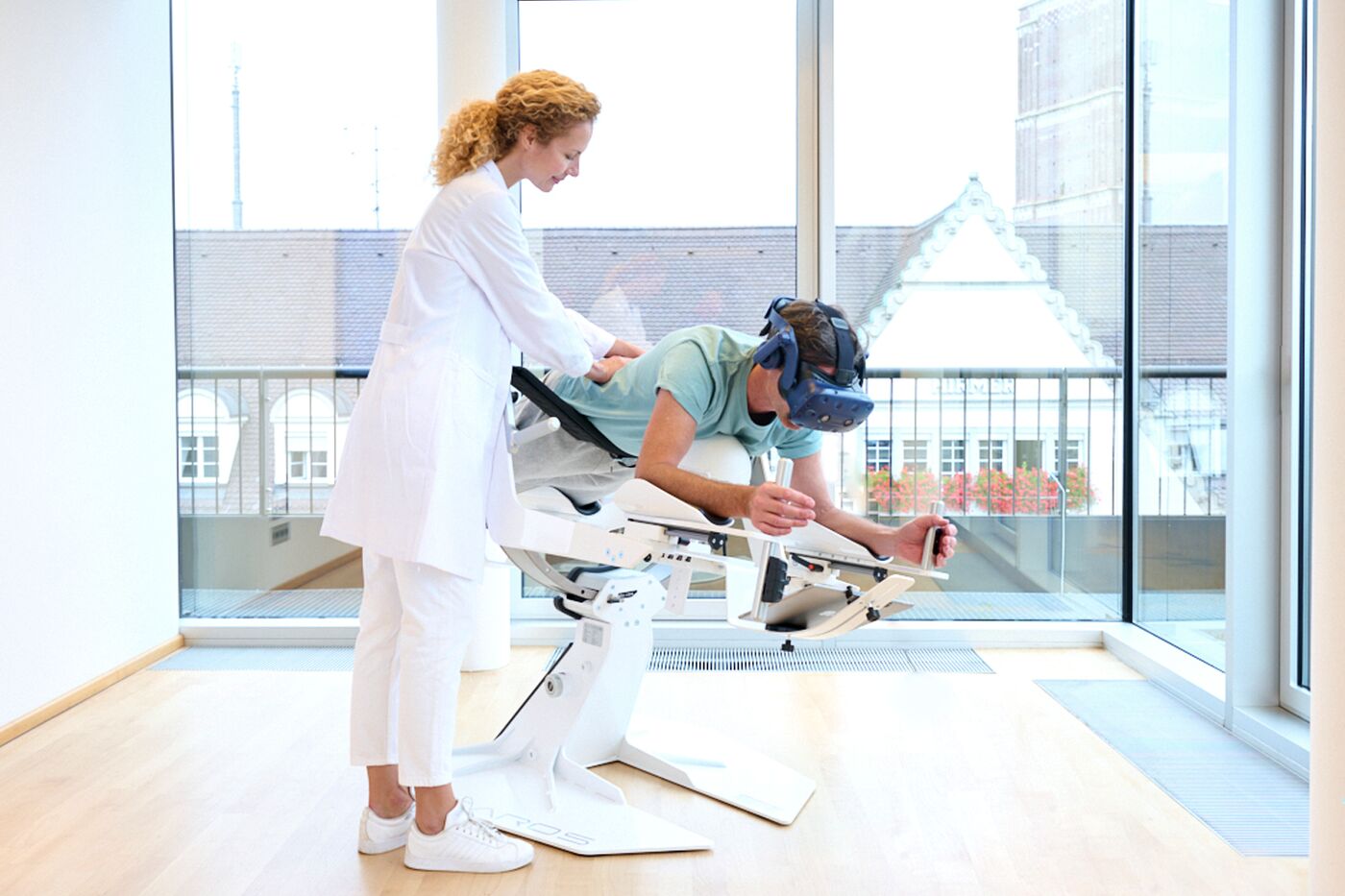
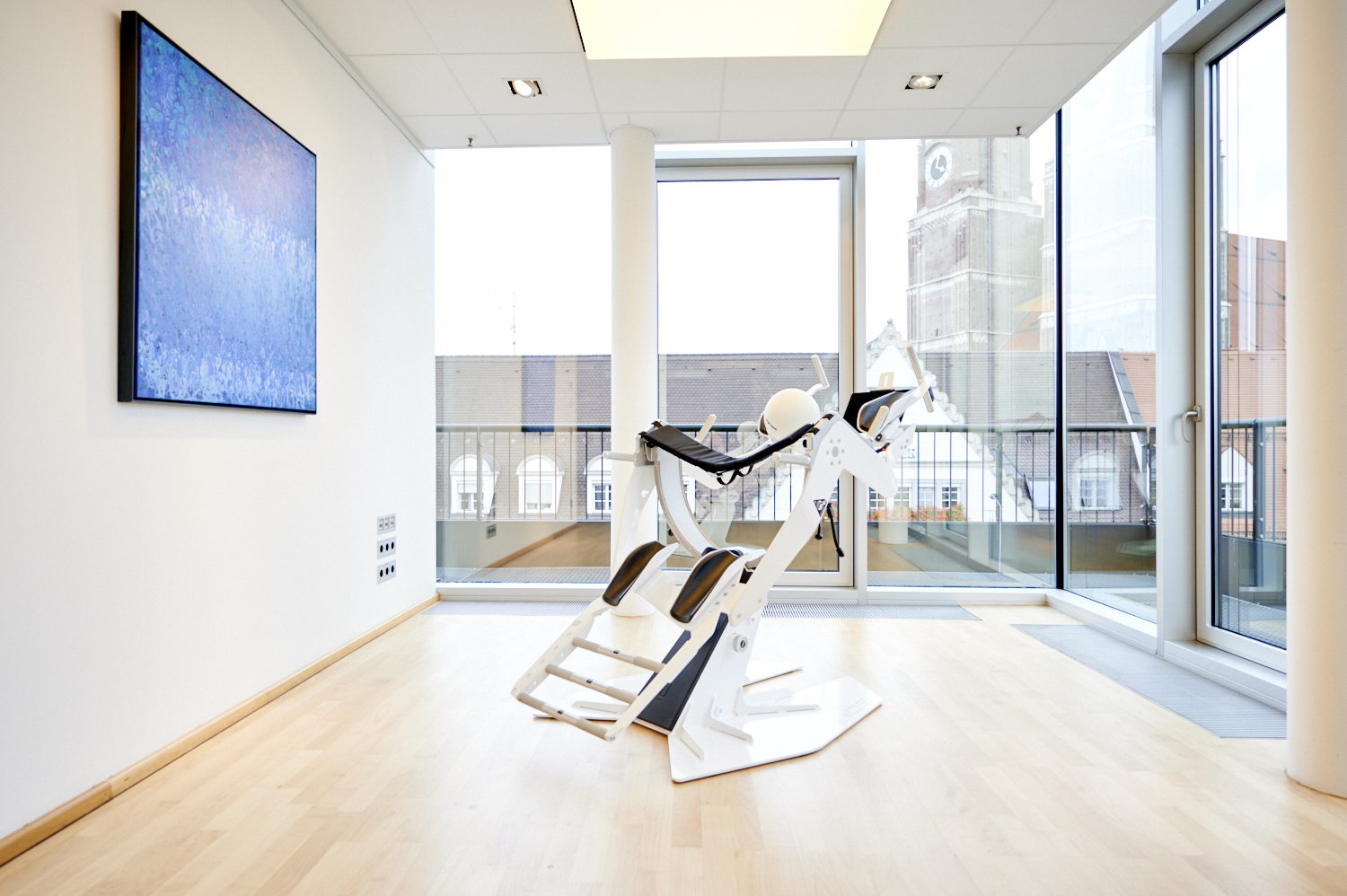
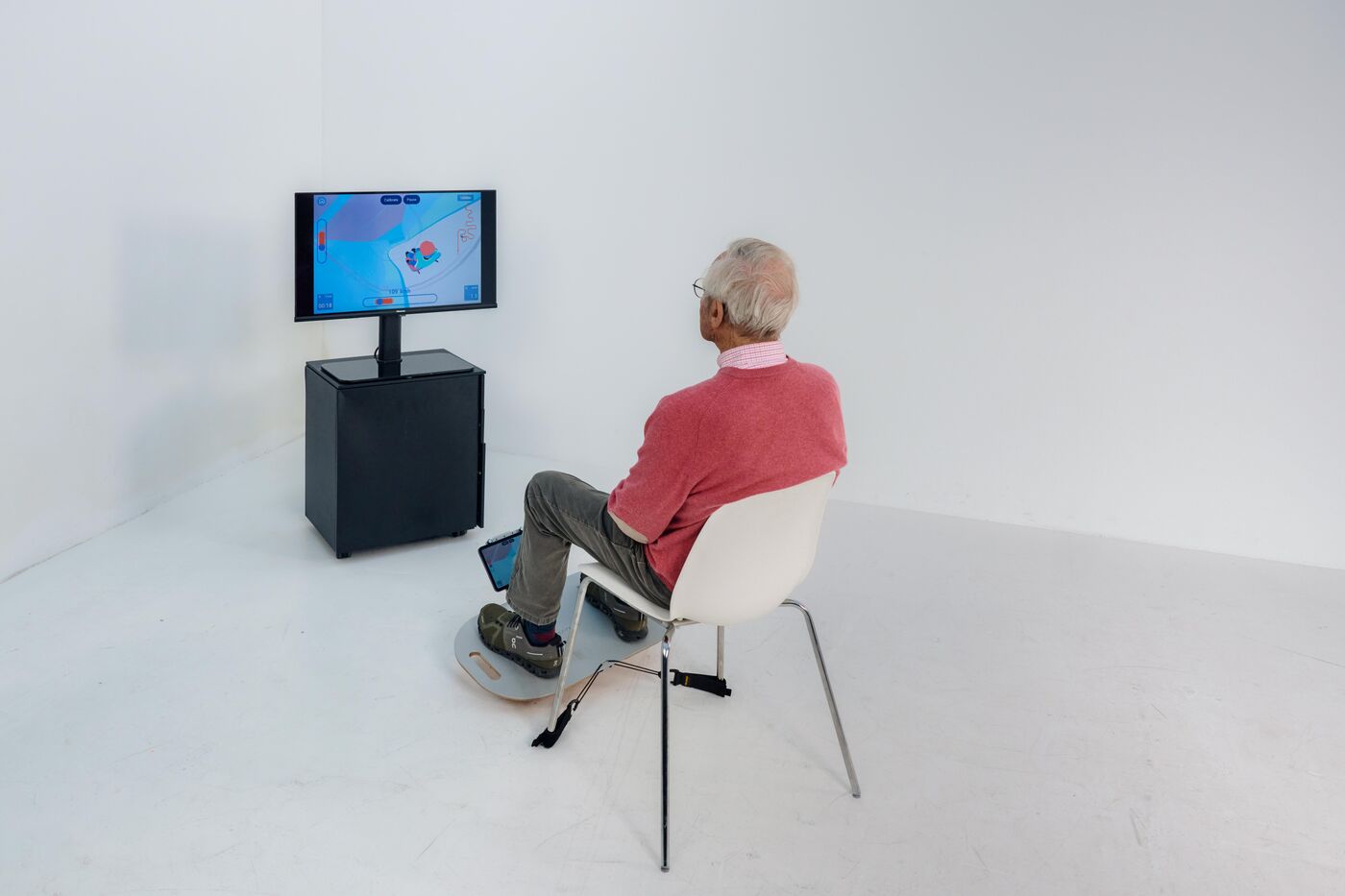
ICAROS Health in a bright training room
ICAROS Health

Pilot study · Poster · German Sport University Cologne

Back pain: gaining mobility with VR

Core training in VR improved mobility in chronic back pain – more than training with a tablet.

  • 10Training sessions
  • VR > Tabletfor mobility gains

ICAROS Health · German Sport University Cologne

Back pain: gaining mobility with VR

Research question

Does exergame-based core training on the ICAROS Health help with chronic back pain – and does it matter whether people train with a tablet or in fully immersive VR?

Study design

Participants
27 people with chronic back pain (15 VR, 12 tablet)
Training
5 weeks 2×/week, 30 min each (20 min core + 10 min exergaming)
Design
Pilot study, VR group vs. tablet group
Measures
Fingertip-to-floor distance, pain (NRS), well-being (WHO-5)

Measurements

Training sessions
10 (over 5 weeks)
for mobility gains
VR > Tablet (Group difference with medium effect size)

Key findings

  • Only the VR group improved mobility significantly (fingertip-to-floor distance, p = 0.042).
  • Mobility showed a significant group difference with a medium effect size in favour of VR.
  • Fully immersive VR training was well tolerated overall.

Context: Pain and well-being did not change significantly in this low-burden group; follow-up studies are to include participants with higher pain intensity.

Source

Hexel E, Zimmermann K, Hoffmann J, Mansuroglu M, Diebschütz S, Mohr V, Brixius K. Tablet-basiertes versus vollimmersives VR-basiertes Exergaming bei unspezifischen chronischen Rückenschmerzen – Pilotstudie. German Sport University Cologne with PhysioSport Mediapark Cologne & Orthopädie Mediapark.

Research with ICAROS

Planning a study, looking to evaluate ICAROS scientifically in your facility, or have questions about the evidence? We look forward to hearing from you.
Get in touch
Studies · ICAROS